

- Politecnico di Milano – Department of Energy - presents new results on the thermal behaviour and aging of LFP batteries at the ECS Fall Meeting in Chicago
- Aging and thermal properties: an advanced methodology based on optical sensors
- Real-life aging: up to nine years of operation in automotive LFP modules
- Contributions supporting the mission of AutoMat
Politecnico di Milano – Department of Energy - presents new results on the thermal behaviour and aging of LFP batteries at the ECS Fall Meeting in Chicago
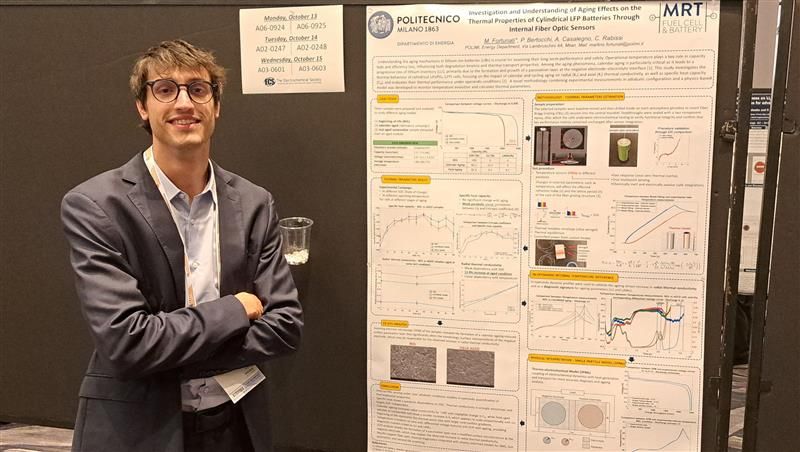
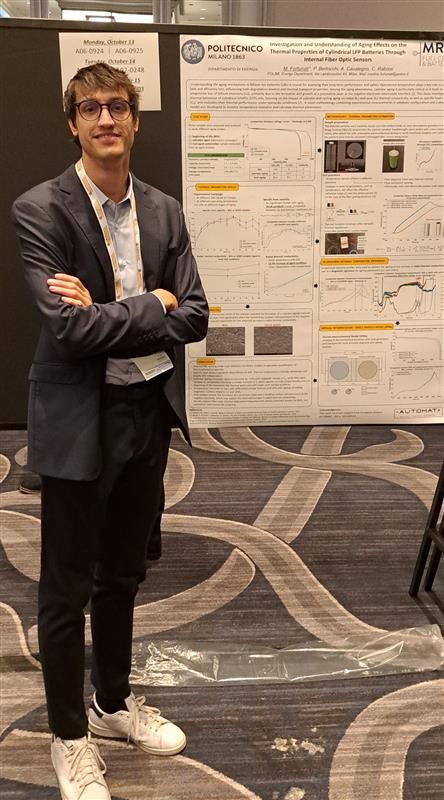
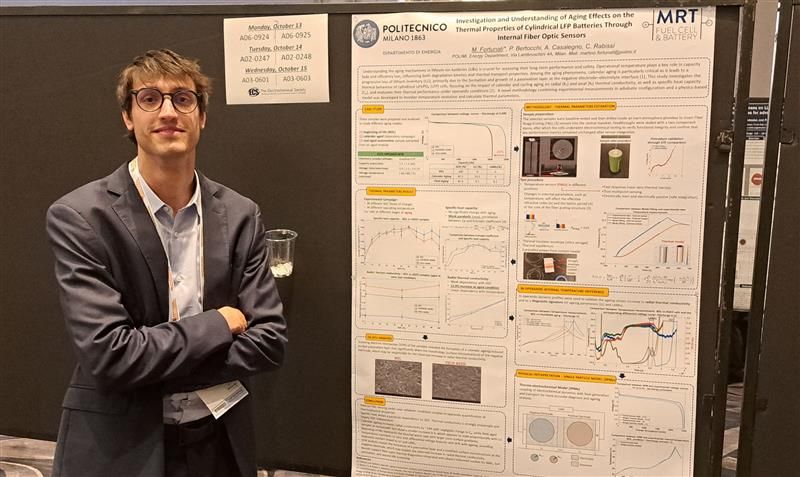
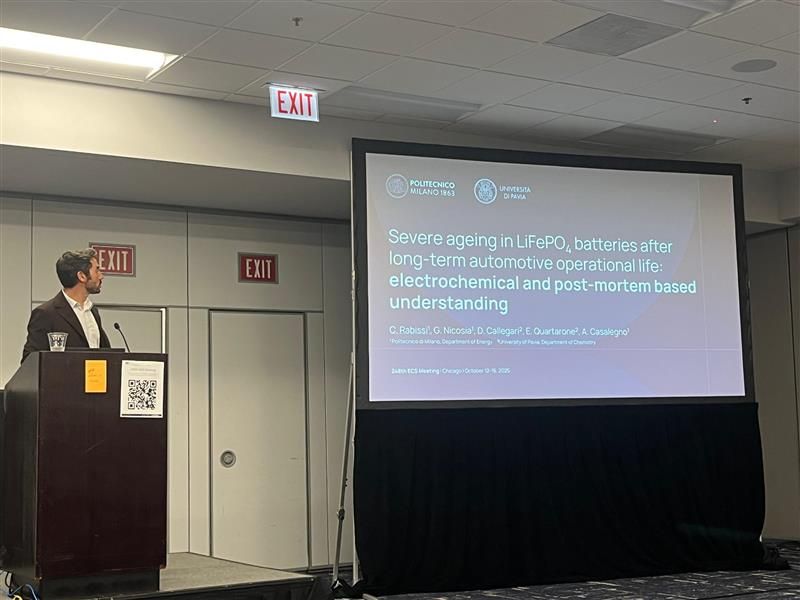
Politecnico di Milano – Department of Energy – participated in the 284th ECS Fall Meeting in Chicago, presenting two scientific contributions supported by the European project AutoMat: a conference speech and a poster focused on studying the effects of aging on the performance of lithium-ion batteries.
The ECS Fall Meeting is one of the leading international conferences in the field of electrochemistry and energy materials. The event annually brings together academic and industrial communities engaged in the development of advanced technologies for batteries, fuel cells, storage systems, and electrochemical devices, offering a high-level scientific venue for presenting innovative results and initiating strategic collaborations.
Aging and thermal properties: an advanced methodology based on optical sensors
In the first contribution, Martino Fortunati and the team of Politecnico di Milano (Department of energy) presented a study examining how aging affects the thermal properties of cylindrical LFP cells. The research introduces an innovative methodology based on Fiber Bragg Grating (FBG) sensors integrated directly into the cell mandrel, enabling high-precision monitoring of temperature evolution under quasi-adiabatic conditions during controlled operating tests.
The comparison between a fresh cell (BOL-Beginning of Life) and a cell with an 83% state of health, representative of early end-of-life in automotive applications, revealed several notable results. The specific heat capacity was found to depend on the state of charge, while radial and axial thermal conductivities remained nearly constant. Aging also resulted in a 14% increase in radial thermal conductivity, a phenomenon attributed to morphological changes in the negative electrode. SEM analyses confirmed the presence of a denser passivation layer that facilitates heat transfer. In addition, the internal temperature profiles recorded through FBG sensors provided valuable diagnostic insights into the cell’s electrochemical condition and degradation mechanisms.
These findings open the way to new non-invasive approaches for assessing battery aging, with direct implications for thermal management, second-life applications and recycling strategies.
Real-life aging: up to nine years of operation in automotive LFP modules
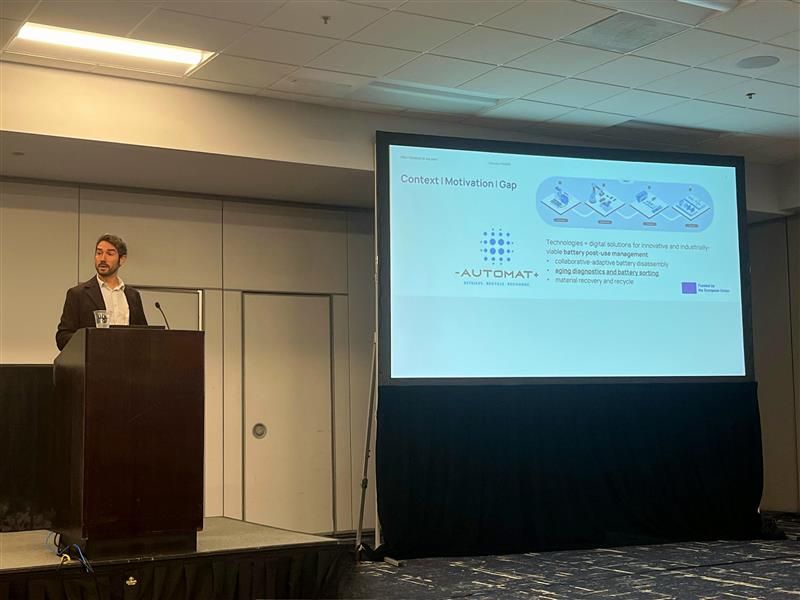
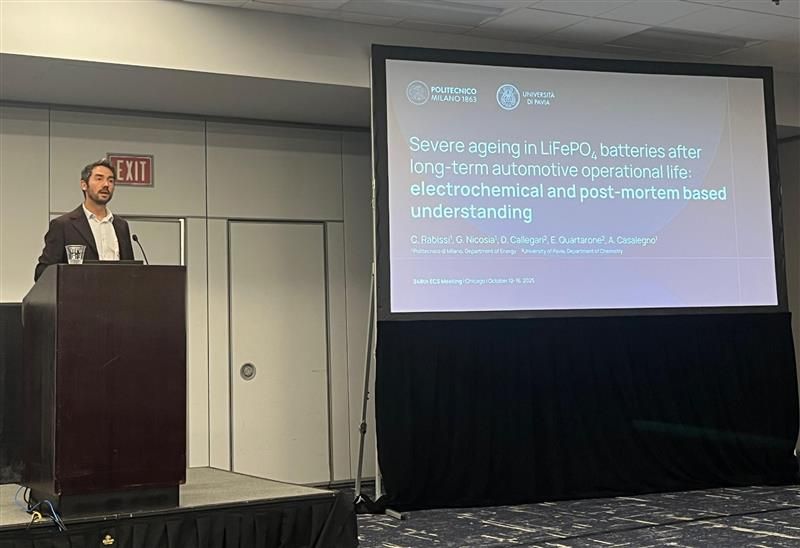
The second contribution, presented by Professor Claudio Rabissi, explored the effects of real-life aging on LFP modules from the automotive sector, characterised by operational lifetimes of up to nine years. The diagnostic campaign, which included voltage analysis, impedance spectroscopy and a detailed comparison of the performance of individual cells within the modules, highlighted significant capacity loss ranging from 80% to 45%, depending on operating conditions. Strong variability among cells was also observed, largely driven by temperature differences during service life.
The study identified lithium inventory loss and increased internal resistance as the dominant aging mechanisms, while the positive electrode showed a high degree of stability. Post-mortem analyses, conducted after module dismantling in collaboration with the University of Pavia, revealed degradation of the electrolyte and the formation of compact layers on the negative electrode that reduce the active area, a phenomenon that appears to be partially reversible.
Contributions supporting the mission of AutoMat
The research activities presented at the conference reinforce the role of Politecnico di Milano within AutoMat in developing scientific and methodological tools aimed at improving advanced battery diagnostics, deepening the understanding of how aging influences safety and performance, and supporting data-driven decisions for reuse, repair, second-life deployment and recycling. These contributions strengthen the project’s commitment to fostering a more sustainable and circular European battery value chain.